
Making a simple round shaft on a lathe is one thing. Making a tiny component with several diameters, tight tolerances, threads, grooves, cross-holes, and a very specific surface finish is another job entirely. This is where advanced turning capabilities start to matter. A capable Swiss turning manufacturer can handle those demanding requirements with far more control than basic machining equipment. The reason is pretty simple: complex components leave very little room for guesswork. A few microns can sometimes separate a part that works properly from one that gets rejected. And when hundreds or thousands of these parts are needed, consistency becomes just as important as the first successful piece.
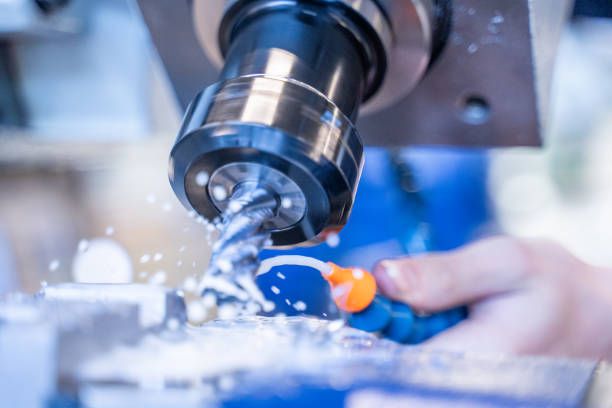
Complex Geometry Needs More Than Basic Turning
Complex components often have shapes that look almost awkward from a machining point of view. There may be narrow sections, stepped diameters, internal features, tiny holes, threads, slots, or several surfaces that need to line up accurately. Traditional turning can handle plenty of work, sure, but it can become limiting when the geometry gets crowded. Advanced CNC turning systems are built for this sort of situation. They can coordinate cutting tools and multiple operations with much tighter control. That means manufacturers can produce complicated features without constantly moving the part from one machine to another. Less handling matters more than people think. Every time a component is removed, repositioned, and clamped again, there is another opportunity for alignment to drift.
Better Support for Small, Delicate Components
Some complex parts are also very small. Medical devices, electronics hardware, aerospace fittings, and miniature mechanical assemblies all use components where size creates its own machining headaches. A long, thin workpiece can flex while being cut. A tiny diameter can be damaged by excessive cutting pressure. That's not something you solve just by telling the operator to “be careful.” The machine setup, tooling, workholding, cutting conditions, and material all have to work together. Swiss-style turning is particularly useful here because the material is supported close to the cutting area as machining takes place. This reduces unwanted movement and helps maintain dimensional stability. For delicate parts, that extra support can make a big difference.
Tighter Tolerances Demand Better Process Control
There are components where being close to the specified size simply isn't good enough. A hole might need to fit a mating pin precisely. A shaft diameter could affect how a bearing sits. A threaded section may have to engage smoothly without being loose. Advanced turning equipment gives manufacturers better control over these dimensions throughout production. Modern CNC systems can maintain programmed movements with impressive repeatability, while inspection equipment can check critical features during or after machining. But let's be real, good tolerances don't come from the machine alone. Tool wear, temperature, material variation, and setup quality all play a part. Experienced machinists account for those factors instead of assuming the numbers will magically stay perfect.
Multiple Features Can Be Machined in One Setup
One major advantage of advanced turning is the ability to combine operations. Instead of turning one feature, stopping the machine, transferring the workpiece, and starting another operation somewhere else, a sophisticated setup may handle much of the component in one cycle. Depending on the equipment, this can include turning, drilling, threading, grooving, boring, milling, and other secondary features. That cuts down on handling and can shorten production time. More importantly, it can improve positional accuracy between features. If two holes need to line up with a turned diameter, for example, machining them within a controlled setup can reduce the risk of mismatch. Fewer setups generally mean fewer opportunities for things to go sideways.
Advanced Tooling Makes a Real Difference
Tooling gets overlooked in conversations about advanced machining. People focus on the CNC machine, then forget the cutting tools doing the actual work. That's a mistake. Complex components can require specialized inserts, drills, thread tools, micro tools, and custom tooling depending on the material and geometry. The tool needs to reach the feature without damaging another surface. It also needs to remove material efficiently while keeping heat and vibration under control. With harder alloys, the challenge gets even bigger. Materials used in aerospace, medical, automotive, and industrial applications aren't always friendly to cutting tools. Advanced turning capabilities give machinists more options for managing those conditions and getting a stable result.
Surface Finish and Repeatability Matter Too
A component can be dimensionally correct and still fail its purpose if the surface finish is wrong. Roughness can affect sealing, friction, wear, fatigue life, or how two components fit together. Complex parts often have several surfaces, and each may have a different finish requirement. Advanced turning systems allow manufacturers to control feed rates, spindle speeds, tooling choices, and cutting paths to achieve the required result. Repeatability is another big piece of the puzzle. Making one excellent part is nice. Making 5,000 parts that all stay within specification is the real test. Production machining has to be predictable; otherwise inspection and scrap costs start eating into the project very quickly.
Why Automation Helps With Difficult Production Runs
Advanced turning isn't only about precision. It's also about keeping production practical. Automated tool changes, bar feeding, probing, monitoring systems, and CNC programming can reduce manual intervention during longer production runs. That doesn't mean the operator becomes irrelevant. Quite the opposite. Skilled people are still needed to set up the machine, choose tooling, review programs, inspect parts, and respond when something changes. Automation simply handles repetitive movements with consistency. For manufacturers producing complex components in batches, this combination can improve throughput while keeping quality under control. It also makes it easier to repeat a proven process when the same part is ordered again months later.
Choosing the Right Turning Partner for Complex Parts
The short answer is that complex components require advanced turning because the machining process has to control a lot of variables at once. Geometry, tolerance, material, surface finish, tool access, setup stability, and production volume all matter. A manufacturer should look beyond whether a supplier owns modern CNC equipment. Ask about its experience with similar components, inspection capabilities, tooling knowledge, programming, and ability to maintain consistency from the first part to the last. A precision turned parts manufacturer should be able to explain how it approaches difficult geometries, not just promise tight tolerances. That's the difference between having a machine that can cut metal and having a machining process that can reliably produce parts people actually depend on.