
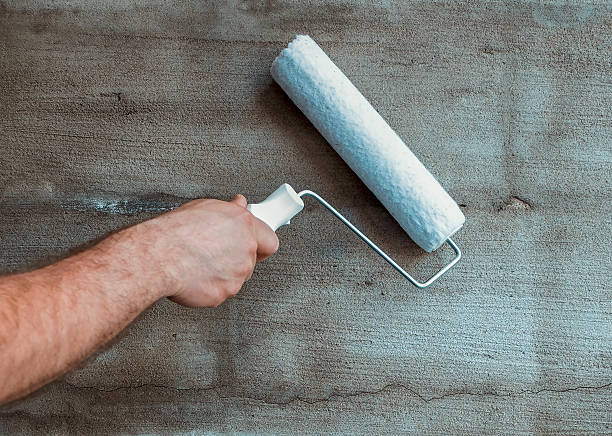
Epoxy jobs don’t forgive mistakes. You feel it pretty quick if your setup isn’t right. The coating sets fast, it shows every line, and if your roller isn’t doing its job, you’ll fight it the whole way. I’ve seen guys blame the epoxy, blame the floor, blame the weather… when really, it was the roller. Somewhere in that setup, the 18 inch epoxy roller makes a big difference, especially once you start covering real square footage. Not saying it fixes everything, but yeah, it matters more than people think.
Why Roller Choice Matters More Than People Admit
A lot of folks treat rollers like an afterthought. Grab whatever’s on the shelf, get to work. That’s fine for paint, maybe. Not epoxy. Epoxy is thicker, heavier, and way less forgiving. If your roller can’t hold material right or release it evenly, you get streaks, bubbles, thin spots… all the stuff clients notice immediately. And once it cures, good luck fixing it clean. So yeah, the roller isn’t just a tool here, it’s part of the system. You mess that up, everything else gets harder.
Nap Length Isn’t Just a Detail, It’s the Whole Game
Nap length changes how epoxy sits and spreads, simple as that. Too short, and you’re dragging material around like you’re short on product even when you’re not. Too long, and now you’re leaving texture where you don’t want it, or worse, trapping air. Most epoxy work sits in that middle ground, something like 3/8" to 1/2" depending on the surface. Smooth concrete? Go shorter. Rough slab? You need a bit more reach. There’s no perfect number, despite what packaging says. You adjust. That’s the job.
Material of the Roller Cover (This One Gets Ignored a Lot)
Not all roller covers are built for epoxy, even if they look the same sitting on the rack. Some fibers just don’t handle solvents or thick coatings well. They shed, they clump, they break down halfway through a job. You’ll see fuzz stuck in your coating and realize too late what’s happening. Woven fabrics or high-quality synthetic blends usually hold up better. Cheap rollers? They fall apart. Simple. Spend a little more here and save yourself a headache later.
Width and Coverage Speed – Where 18 Inch Rollers Shine
This is where the 18 inch epoxy roller earns its keep. On bigger floors, using a standard 9-inch roller feels like mowing a football field with scissors. You can do it, but why would you. The wider roller lays down more epoxy in fewer passes, which matters because epoxy has a working time. You don’t want edges drying while you’re still halfway across the room. That’s how lap lines happen. Bigger rollers help keep a wet edge going. Less overlap, smoother finish. Just know—they’re heavier, a bit awkward at first. Takes a minute to get used to.
Core Strength and Frame Stability (Don’t Cheap Out Here)
People focus on the cover but forget the core and frame. Bad move. If the core flexes or the frame bends even a little, your pressure isn’t consistent. That means uneven application, even if your technique is decent. With epoxy, consistency is everything. A solid core keeps the roller from warping under weight, and a sturdy frame gives you control. Especially with wider rollers, cheap frames feel it immediately. They wobble. You’ll fight it the whole time.
How Load and Release Affect Your Finish
A good roller doesn’t just hold epoxy—it releases it evenly. That’s the trick. Some rollers soak up too much and dump it all in one spot. Others don’t hold enough, so you’re constantly reloading. Neither works well. You want that steady, predictable flow. Load it, roll it, it spreads clean. No guessing. When that’s dialed in, your passes look consistent without you overthinking every stroke. When it’s not, you’re basically chasing your own work the whole time.
Shed Resistance (Because Nothing Ruins a Floor Faster)
There’s nothing worse than finishing a clean coat and spotting lint stuck in it. Tiny fibers, locked in forever. That’s almost always a roller issue. Good epoxy rollers are made to be low-shed or no-shed, but not all of them live up to that. Sometimes even “decent” ones need a quick prep—tape them off, rinse them, whatever you trust. Takes two minutes. Saves the job. Skip that step, and yeah… you might regret it.
Technique Still Matters (Even With the Right Roller)
Here’s the part nobody likes to hear: even the best roller won’t fix bad technique. You still need to move at the right pace, keep a wet edge, and not overwork the epoxy. I’ve seen guys with top-tier gear still leave marks because they keep going back over semi-set material. You can’t do that with epoxy. Lay it down and let it level. The roller helps, sure, but it’s not magic.
Choosing the Best Setup for Your Job
At some point, you’ve got to match your roller to the job, not the other way around. Surface texture, epoxy type, temperature, even how fast your crew moves—it all plays a role. There isn’t one universal answer, no matter what product labels claim. If you’re working bigger areas, that wider setup starts to make more sense. If it’s a tighter space, maybe not. And when people ask for the best roller for epoxy, the honest answer is always, “depends.” Not exciting, but true.
Conclusion
A good epoxy finish isn’t luck. It’s small decisions stacking up—roller choice being one of them. You get the nap right, pick a cover that doesn’t shed, use a frame that doesn’t flex, and suddenly the job feels smoother. Not easy, just… smoother. The 18 inch epoxy roller can speed things up and help with consistency, but only if the rest of your setup makes sense too. At the end of the day, the roller isn’t everything, but mess it up and you’ll feel it in every pass.