
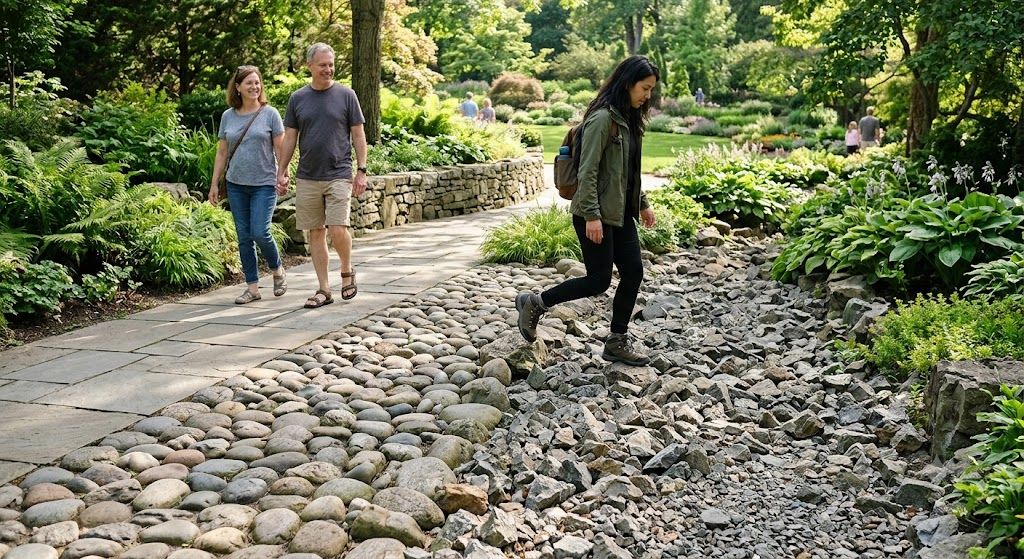
Have you ever walked across a garden path and felt your feet slipping on loose stones? Or tried to push a wheelbarrow over rough rocks and wished the surface were a little smoother? These small things can make a big difference in how we use an outdoor space. When choosing materials from a San Diego rock supply, we need to look beyond color and appearance. The texture of each rock matters too. It affects how easily people can walk, how well the ground holds together, and how safe a landscape feels every day.
Why Does Rock Texture Matter Underfoot?
Not all rocks feel the same when we walk on them. Some have smooth, rounded surfaces, while others have sharp edges and rough sides. Each type behaves differently underfoot.Smooth stones can feel comfortable in decorative areas, but loose, rounded rocks may shift when someone steps on them. Angular crushed rock often locks together better, especially when the material is properly graded and compacted. Still, sharp edges may feel uncomfortable on paths where people walk in sandals or barefoot.So, what works best? It depends on where the rocks will go and how people will use that space.
Smooth Rocks vs. Rough Rocks: Which Is Safer?
Smooth river rocks look lovely around plants, garden borders, and water features. Their rounded shapes give landscapes a soft, natural appearance. The catch is that they can roll or move under pressure. That may not be a problem in a quiet flower bed, but it can become a nuisance on a busy walkway.Rougher rocks offer a different benefit. Their uneven surfaces may provide more grip, and angular pieces can create a firmer layer when installed correctly. Yet roughness alone does not guarantee safety. Loose stones can still shift, and sharp pieces can cause discomfort or trip hazards.For walkways, we should pay attention to both the rock's surface and the way the material settles. A stable, even path is usually more useful than one that simply looks attractive.
How Foot Traffic Changes the Landscape
Think about a path leading from your driveway to your front door. People use it every day, delivery workers walk across it, and sometimes children run along it. The surface needs to handle all that movement without becoming uneven.Frequent foot traffic can push loose stones toward the edges, leave bare patches, and create dips in the walking surface. Fine particles may also wash away or move after rain. Before long, the path that once looked neat can become difficult to walk on.For these areas, choose a material suited to regular use. Proper ground preparation, suitable grading, and firm compaction can help reduce movement. Edging can also keep loose rock from spreading into nearby grass or onto paved surfaces.
Choosing the Right Rock for Different Landscape Areas
Every part of a yard has its own needs. There is no reason to use the same rock everywhere.
- Garden beds: Smooth river rock or decorative gravel can add texture and help create a clean finish. Since people rarely walk through these areas, comfort underfoot may be less important.
- Garden paths: Look for material that creates a stable walking surface. Angular gravel with a suitable range of particle sizes may work better than loose, rounded stones.
- Driveway edges: Choose rock that suits the expected load and helps keep the edges tidy. A decorative stone alone may not provide enough support for vehicles.
- Pool surroundings: Pay close attention to grip, drainage, and bare-foot comfort. Avoid assuming that rough or textured stone is automatically slip-resistant, especially when wet.
If you are unsure which material fits your project, a dependable supplier can help you compare options before ordering.
Do Weather and Drainage Affect Rock Safety?
Absolutely. A surface that feels fine on a dry afternoon may behave differently after rain. Water can collect between stones, wash away smaller particles, or leave a slippery film on certain surfaces. In sloped areas, loose material may move downhill and create uneven spots.Good drainage helps prevent these problems. Prepare the ground properly, account for the slope, and choose rock that suits the site's conditions. It also helps to check walkways after heavy rain and replace material that has shifted.A little maintenance now can save plenty of frustration later.
What Should You Check Before Buying Landscape Rock?
Before placing an order, think about the people who will use the space. Will children play there? Will older adults walk across it? Does the path need to support garden carts or occasional equipment?Then consider the rock's size, shape, surface feel, and how firmly it can be installed. Ask about suitable applications rather than choosing by appearance alone.Working with a reliable san diego rock supply can help you find materials that suit your landscape design and everyday needs. At Western Materials, we know that good-looking rock should also make sense for the job. Share your project details with our team, ask about available options, and get a quote before you start.
Frequently Asked Questions
1. Is smooth river rock a good choice for walkways?It can be used in decorative areas, but loose river rock may roll underfoot. For regular walking paths, a more stable material is often a better choice.
2. Does rough rock provide better grip?Rough surfaces may offer more traction, but grip also depends on the rock type, installation, moisture, and how firmly the material sits. Roughness alone does not ensure safety.
3. What type of rock is best for a garden path?Angular gravel or a properly graded aggregate may work well when installed over a prepared base. The best option depends on foot traffic, drainage, and the look you want.
4. How can we stop landscape rock from spreading onto walkways?Install suitable edging, prepare a stable base, and check the area regularly. Repositioning loose stones and filling low spots can help keep the landscape neat and safe.
5. Where can we find suitable landscape rock in San Diego?A local supplier such as Western Materials can help you compare available rock and gravel options for paths, garden beds, and other outdoor projects. Explain how the area will be used so you can choose material that fits your needs.