
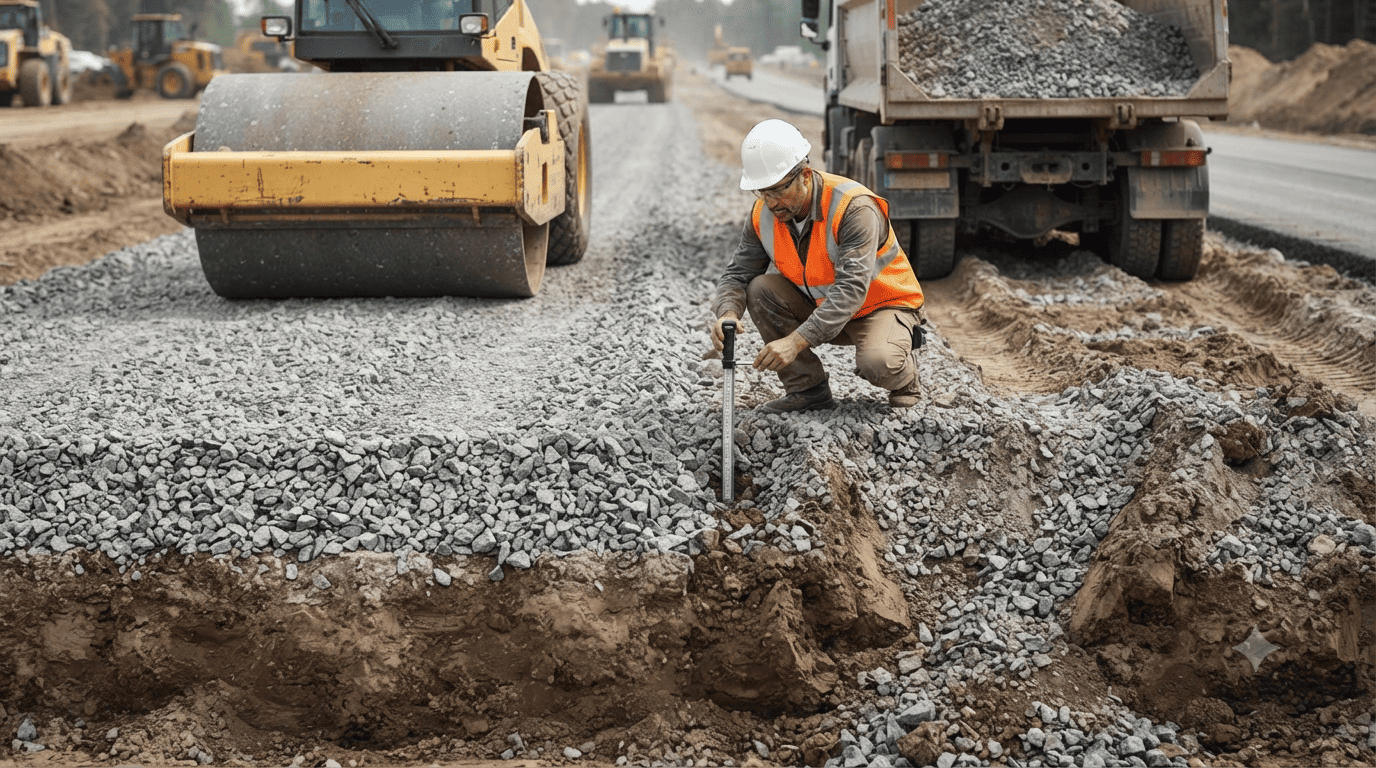
Have you ever noticed how a gravel surface looks perfectly fine at first but starts developing dips, soft spots, or uneven areas after a while? It can be frustrating, especially when the surface is expected to handle regular traffic or heavy loads. When working with crush and run gravel, the way we spread and compact each layer makes a real difference. Layer thickness affects how well the material settles, how tightly the particles fit together, and how evenly the weight above the surface gets distributed.
Let us look at why getting the layer thickness right matters and what can happen when we get it wrong.
Why Does Layer Thickness Matter in Gravel Applications?
Crush and run gravel contains crushed stone particles in different sizes, along with smaller pieces and fine material. When these particles are spread and compacted, they fit together to form a firm base.
But here is the thing... spreading all the material in one thick layer does not always give us the strong foundation we want.
The compaction equipment needs to reach through the material and press the particles together. If the layer is too thick, the upper portion may become firm while the bottom remains loose. This can create weak areas that settle later under traffic or construction loads.
On the other hand, spreading the material in manageable layers makes it easier to achieve even compaction from top to bottom.
How Thin Layers Help Control Settlement
Settlement happens when loose particles shift, rearrange, or move closer together under pressure. A properly compacted gravel base has less room for unwanted movement.
When we spread thinner layers, compaction equipment can work more effectively across the entire depth. The particles move into better positions, and the smaller pieces help fill the gaps between larger stones.
This creates a more stable surface.
Think about a driveway, for example. If the base is not compacted properly, vehicle tires can gradually push loose material aside. Before long, you may notice shallow depressions or uneven patches.
Using suitable layer thickness during installation helps reduce this problem and gives the finished surface a better chance of staying level.
What Happens When Gravel Layers Are Too Thick?
Thicker layers are not always a shortcut. In fact, they can create more work later.
When too much material is placed at once, the compaction force may not reach the bottom evenly. The upper section might feel hard underfoot, but the lower section can remain loose.
Over time, this difference can lead to:
- Uneven settlement under vehicle or equipment weight.
- Soft spots in driveways and access roads.
- Surface dips where water can collect.
- Reduced support for pavement or other materials placed above.
- More maintenance and repeated grading.
Nobody wants to repair a surface just a few months after installation. A little extra care during preparation can save plenty of trouble.
How Layer Thickness Affects Load Distribution
A gravel base does more than provide a level surface. It also helps spread the weight placed on it.
When properly compacted, the crushed particles form an interlocked structure. This structure allows loads from vehicles, equipment, and other surfaces to spread across a wider area instead of concentrating on a few points.
If the layers are unevenly compacted, some sections may carry more pressure than others. Those weak spots can start moving under repeated loads.
With properly installed crush and run gravel, each compacted layer contributes to a more consistent foundation. This is especially useful for driveways, parking areas, access roads, and construction bases.
Choosing the Right Layer Thickness for Your Project
So, how thick should each layer be?
There is no single measurement that works for every project. The right thickness depends on the gravel size, soil conditions, compaction equipment, and expected load.
For many applications, contractors spread the material in lifts of around 4 to 6 inches before compaction. The actual loose depth may need adjustment depending on the equipment and project specifications.
It is also important to check the ground underneath. Soft or poorly drained soil may need extra preparation before placing the gravel.
We should never rush this stage. Compact one layer properly, check the surface, and then move on to the next. Simple steps like these can make a noticeable difference.
Build a More Stable Base with the Right Gravel
A strong gravel surface starts below what we can see. Proper material selection, suitable layer thickness, and careful compaction all work together to reduce settlement and improve load distribution.
At Western Materials, we supply quality aggregate materials near me in California for construction, road base, and landscaping applications. Whether you are preparing a driveway, access road, or another project, choosing the right material is an important first step.
Looking for dependable crush and run gravel for your next project? Get a quote from Western Materials and find the right aggregate for your application.
Frequently Asked Questions
1. What is the ideal layer thickness for crush and run gravel?
A common starting point is 4 to 6 inches per loose lift before compaction. The suitable depth depends on the equipment, material, ground conditions, and project requirements.
2. Can thick gravel layers cause uneven settlement?
Yes. If the compaction equipment cannot reach the bottom of a thick layer effectively, loose material may remain underneath. This can lead to uneven settlement over time.
3. Why should gravel be compacted in multiple layers?
Multiple layers allow better compaction throughout the base. Each lift can be checked and compacted before adding more material, helping create a firm and even foundation.
4. Does layer thickness affect the load-bearing capacity of gravel?
Yes. Poorly compacted layers can create weak areas that struggle under heavy loads. Properly placed and compacted layers help distribute pressure more evenly.
5. Is crush and run gravel suitable for heavy vehicle areas?
It can be suitable for driveways, access roads, and other vehicle areas when the material, base depth, soil preparation, and compaction are properly selected for the expected traffic and weight.