
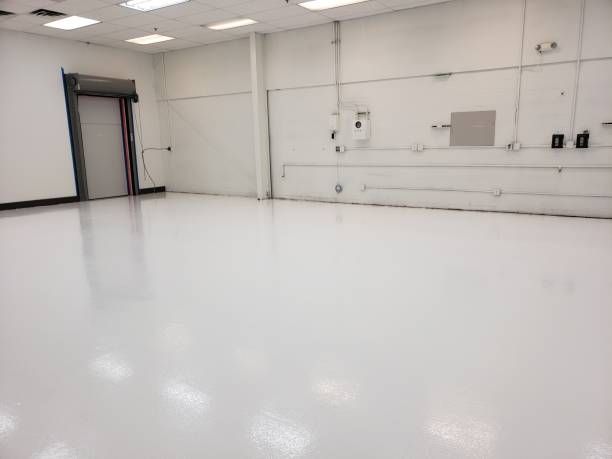
Most business owners compare flooring by the install quote and stop there. That’s the wrong number. A floor you’ll walk on, clean, and repair for a decade should be judged on what it costs over ten years, not on day one. Polished concrete and coated floors both look sharp and both last, but they behave very differently once real work starts. If you’re weighing the two and talking to a few commercial epoxy flooring companies, here’s how the numbers tend to play out.
What Each Option Actually Is
The polished concrete floor is made by grinding down the slab using finer and finer diamond pads, followed by a process where a densifier is applied to make the floor harden and shine. There is no coating to flake away because there is no coating at all. The epoxy or polyaspartic floor is simply a coating applied over prepared concrete floors.
Upfront Cost
It might cost you less with polished concrete if your slab is already flat and without any blemishes. However, once the surface of the concrete develops cracks, stains, or even irregularities, the prices tend to skyrocket since each one will need to be fixed.
On the other hand, coating will provide you with much more stable pricing since fixing the cracks and preparing the surface is included in the process. Neither solution is necessarily cheaper, so consider getting prices on both of them.
Maintenance Over Ten Years
This is where the ROI is determined. Polished concrete remains porous beneath its shiny surface. Stains from oil, coolant, and acids can penetrate the surface and be difficult to get out. The floor will often need regular polishing and/or sealing to maintain its appearance, which involves scheduling and additional cost.
A sealed finish allows any spills to remain on top so that cleaning can be done with mopping and degreasers. The wear and tear comes only to the top coat, which only needs to be refreshed at intervals of several years rather than grinding down the entire slab. This reduced maintenance cost makes a difference.
Safety and Slip Resistance
A wet, shiny floor becomes slippery, and applying anti-slip properties at a later time would be difficult. Coatings enable you to incorporate traction within the system right from the beginning through the use of flakes or tiny anti-slip particles that fit the needs of each location. When your floor comes in contact with water, grease, and rolling objects, this becomes a great benefit.
Durability and Downtime
Polished concrete is durable against pedestrian traffic and abrasion, but it can be chipped, etched, and stained in hostile environments. Polyaspartics are very elastic and have excellent abrasion resistance; they also stand up to chemicals well. They do not turn yellow in sunlight, which is important for areas near large windows.
Timing is another consideration. Polishing concrete can take days due to several grinding steps. Most installations of polyaspartics finish within one day, and light traffic is allowed within hours. If each closed day means lost sales for you, then your payback period shortens significantly.
Which One Wins on ROI?
This varies from one place to another, but a trend emerges. In dry, low-risk places with good concrete surfaces, for example, an office lobby or a retail floor, polished concrete works very well in terms of value for money. In chemically sensitive, moist, high-traffic environments or places with stringent hygiene requirements, coatings usually win after the cost of maintenance is factored in.
Aesthetic appeal is another consideration. The polished concrete gives an industrial look while coatings have many more options, including solid and full flake coatings.
Picking an Installer You Can Trust
Whichever way you lean, the team you choose matters as much as the material. Ask how they prepare the slab, what they’d recommend for your conditions and why, and get the warranty in writing. A good contractor will tell you honestly when polished concrete is the better fit.
If you’re in North Alabama and shortlisting commercial epoxy flooring companies, Rocket City Epoxy is one local option worth adding to your shortlist. The Huntsville team installs polyaspartic and epoxy systems, schedules nights and weekends, and offers a three-year warranty on commercial floors. You can compare a couple of quotes either way to choose the best one.
Final Thoughts
Do not just focus on the first bill that comes. Consider things like spills, traffic, closings, and what the floor will be like in eight years. Have two or three companies specializing in epoxy flooring quote you both prices, and the ten-year cost will decide.
FAQs
Is epoxy cheaper than polished concrete?
It does not necessarily have to be like that. Polished concrete may be cheaper if the concrete slab is flawless. Damaged, stained, and cracked surfaces will make things more expensive immediately. Coatings normally come with more standard pricing due to the presence of repairs in the process.
Which lasts longer, epoxy or polished concrete?
Both of these can last more than ten years. The polished concrete has no top coat that may come off, but it stains and will need repolishing. A commercial top coat lasts for five to ten years, while polyaspartic lasts longer, and adding another top coat adds to the lifespan of the flooring.
Which is easier to maintain?
Coatings are relatively simpler to deal with since the sealed, non-porous surface allows wiping off any oils and chemicals without absorption, while using an ordinary mop or autoscrubber will be sufficient. On the other hand, polished concrete remains porous and hence can easily stain; hence re-sealing or polishing can be needed at intervals.
Is polished concrete more slippery than epoxy?
That may be the case, particularly when it is wet, due to the fact that it is smooth and shiny. There are coatings that contain flakes or grit that provide traction at the required places. This is very important in wet or greasy areas, though interior dry environments are always safe.
How do I choose among commercial epoxy flooring companies?
Ask them how they make the concrete, what system they would suggest for you, and how long it will take to install. Ask for a price list and proof that they have insurance and a warranty. Pictures of completed projects and testimonials from other businesses will give you a good idea about the company’s reputation.